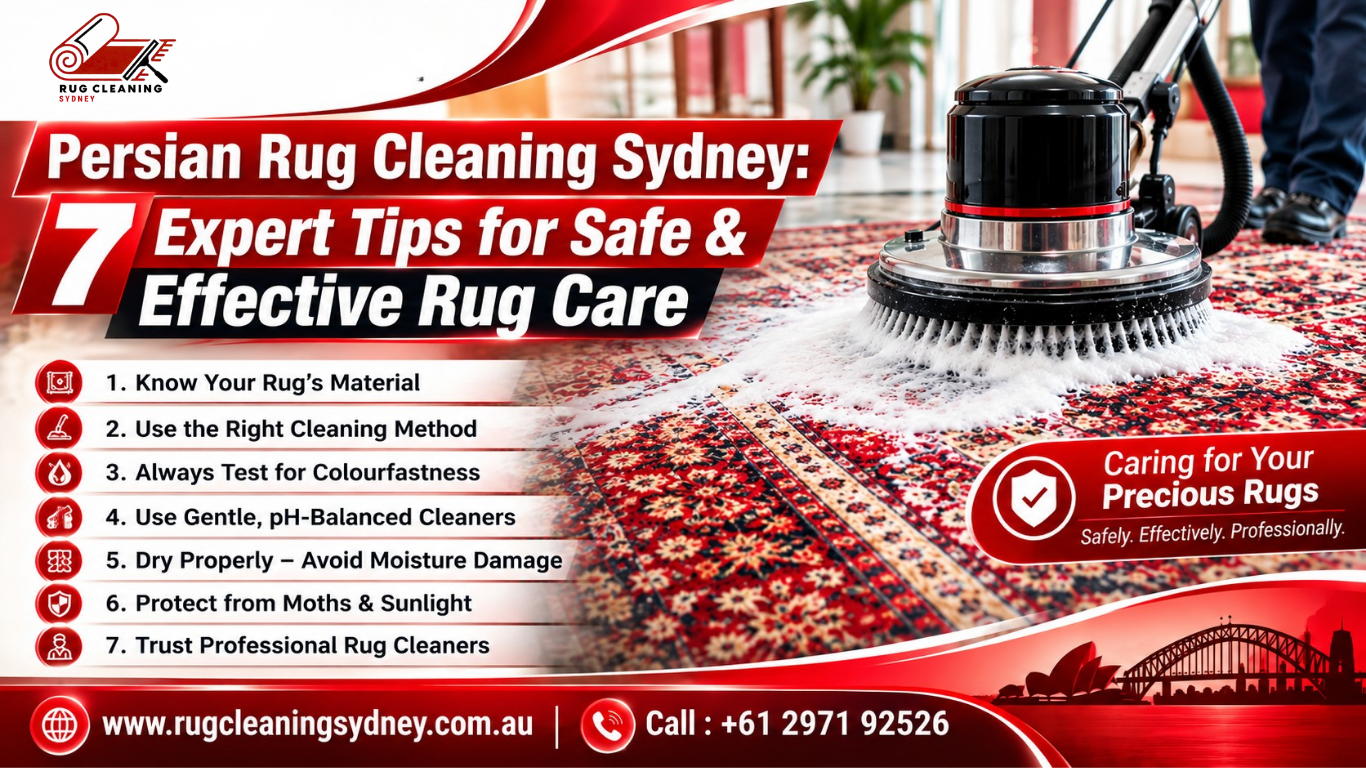
Persian rug cleaning Sydney refers to hand-washing services that use pH-balanced solutions, dye testing, and slow air-drying to protect wool and silk fibres. It works by soaking, gently agitating, then rinsing out soil without harsh scrubbing. Key steps include dye testing, hand washing, and controlled drying — DIY steam cleaning often causes shrinkage or colour bleed.
You've owned that Persian rug for years. Maybe decades. It's soaked up spilled wine, muddy paws, and a thousand footsteps.
Now it looks tired. Dull. A bit sad in the corner of your living room.
Here's the problem: most Sydney homeowners treat a Persian rug like a regular carpet. Rent a steam cleaner, scrub hard, hope for the best.
That's exactly how heirloom rugs get ruined. Wrong water temperature. Wrong chemicals. Wrong drying method.
This guide breaks down how professional Persian rug cleaning actually works in Sydney — and the mistakes that quietly destroy fibres, dyes, and resale value.
What You'll Learn
What Makes Persian Rug Cleaning Different From Regular Carpet Care
A Persian rug isn't carpet. It's a hand-knotted textile, often made from wool, silk, or a blend of both.
Each knot is tied by hand. Some rugs hold over 100,000 knots per square metre.
That craftsmanship comes from ancient Persian weaving traditions, where natural dyes and hand-spun wool were the standard.
Standard carpet steam cleaners push hot water and pressure into synthetic fibres built for exactly that. Persian rugs weren't built for it.
- Natural dyes can bleed under high heat or harsh detergents
- Silk fibres weaken when over-wetted or agitated roughly
- Wool foundations can shrink if dried too slowly
- Fringe and edge bindings fray under machine brushes
Sydney's humid coastal climate adds another layer of risk. Rugs that don't dry fully can develop mould within days.
That's why delicate rugs need a completely different approach to standard delicate rug cleaning methods used elsewhere.
How Professional Persian Rug Cleaning Works in Sydney (Step-by-Step)
Real Persian rug cleaning is a slow, hands-on process. Not a quick vacuum-and-spray job.
1. Inspection and Dye Testing
Technician inspects fibre type, weave density and existing damage. A small dye test confirms colours won't run.
2. Dry Soil Removal
Dust and grit sit deep in the pile. Specialist equipment lifts this out before any water touches the rug.
3. Hand Washing
The rug is submerged and gently washed with organic, pH-balanced soap — never harsh detergents or bleach.
4. Rinsing and Extraction
Soap and soil that has been loosened is washed away by clean water. Any excess moisture is removed to accelerate drying.
5. Controlled Drying
Rugs are either dried on a flat surface or hung in a ventilated area, and not dried in the sun as this causes the natural dyes to fade.
6. Grooming and Fringe Correction
The pile is brushed back into shape. Fringe is straightened, cleaned, and repaired if frayed.
Featured Answer: Professional Persian rug cleaning in Sydney follows six steps: inspection, dye testing, dry soil removal, hand washing, controlled rinsing, and slow drying. The full process typically takes 3–5 days, protecting natural dyes and delicate wool or silk fibres from damage.
Compare that to a rented steam cleaner: fifteen minutes, high heat, and zero dye testing. The risk gap is enormous.
Not sure if your rug needs a deep clean? Get a free inspection before booking anything.
Common Persian Rug Cleaning Mistakes Sydney Homeowners Make
Most rug damage isn't from age. It's from well-meaning DIY attempts that go wrong.
| Mistake | Why It Damages the Rug |
|---|---|
| Scrubbing stains hard | Breaks wool fibres and pushes stains deeper |
| Using carpet steam cleaners | Over-wets natural fibres, causing shrinkage |
| Drying in direct sunlight | Fades natural dyes unevenly |
| Vacuuming the fringe | Pulls and frays delicate edge threads |
| Ignoring small moth holes | Allows larvae to spread through the pile |
That last one catches people off guard. Left unchecked, moth damage spreads fast in wool rugs stored in dark, humid areas.
If you've spotted small bare patches, our guide on rug moth protection in Sydney covers exactly what to check.
Fringe damage tells a similar story. Loose threads look minor but signal a weakening foundation underneath.
Our breakdown of common rug repair problems explains how professionals fix this before it worsens.
How Often Should You Clean a Persian Rug in Sydney?
This depends on foot traffic, pets, and where the rug sits in your home.
- High-traffic hallways or living rooms: Every 12 months
- Homes with pets or children: Every 6–12 months
- Low-traffic bedrooms or formal rooms: Every 18–24 months
- After any visible stain or spill: As soon as possible
Waiting too long lets grit work its way into the foundation. That grit acts like sandpaper on every knot.
Between full cleans, gentle vacuuming and quick spot-blotting go a long way toward protection.
Choosing a Persian Rug Cleaning Service in Sydney: What to Look For
Not every "rug cleaner" in Sydney actually specialises in Persian and Oriental rugs.
- Ask about dye testing. Any specialist should test colourfastness before washing.
- Check for a dedicated facility. Hand-washing needs space, not a truck-mounted unit.
- Look for real experience with wool and silk. Ask specifically, not generally.
- Confirm pickup and delivery. Transporting a large rug yourself is impractical.
- Read reviews mentioning heirloom or antique rugs.This is an indication of true expertise in the field.
Industry standards from the IICRC S100 cleaning standard outline proper procedures for textile floor coverings, including area rugs.
A provider familiar with these standards is far less likely to guess their way through your rug's cleaning process.
Environmentally conscious options matter too, especially in homes with kids or pets. See our guide to eco-friendly cleaning solutions for what to ask providers.
DIY Care Between Professional Cleans
You don't need to do nothing between professional cleans. A few habits protect your rug significantly.
- Vacuum weekly on a low-suction, no-beater-bar setting
- Rotate the rug every 6 months for even wear
- Blot spills immediately — never rub
- Keep rugs out of direct, prolonged sunlight
- Use a breathable rug pad to reduce moisture buildup underneath
Sydney's humidity means moisture trapped under a rug pad can encourage mould. Check the underside every few months.
Indoor air quality also matters here. The Australian Centre for Disease Control notes that indoor air quality directly affects household health, and trapped dust in rugs plays a real part.
Ready to bring your Persian rug back to life?
People Also Ask
What is Persian rug cleaning?
Persian rug cleaning is a specialist hand-washing process for hand-knotted wool or silk rugs. It uses dye testing, gentle soap, and controlled drying to remove soil safely.
How do I know if my Persian rug is wool or silk?
Wool feels warm and slightly coarse, while silk feels cool and smooth with a subtle sheen. A professional can confirm this during inspection.
How much does Persian rug cleaning cost in Sydney?
Pricing depends on rug size, fibre type, and condition. Most Sydney specialists offer a free quote after a physical inspection.
Persian rug cleaning vs regular carpet cleaning: what's the difference?
Carpet cleaning uses machine steam and synthetic-fibre chemicals. Persian rug cleaning uses hand-washing and gentler, pH-balanced solutions suited to natural fibres.
What is the best way to clean a Persian rug in Sydney?
The safest method is professional hand-washing with dye testing and slow air drying. This avoids the shrinkage and colour bleed risks of DIY steam cleaning.
Frequently Asked Questions
Q: Can I clean my Persian rug at home?
A: Light vacuuming and spot-blotting are fine at home. Full washing should be left to specialists, since wrong products can cause permanent dye damage.
Q: How long does professional Persian rug cleaning take?
A: Most rugs take 3–5 days from pickup to delivery, allowing time for hand washing and full drying.
Q: Will cleaning fix a musty smell in my rug?
A: Usually yes. Deep hand washing removes trapped moisture and bacteria that cause lingering odours.
Q: Is it safe to clean an antique Persian rug?
A: Yes, with the right specialist. Antique rugs need extra dye testing and gentler handling throughout the process.
Q: Can pet urine stains be fully removed?
A: In most cases, yes. Deep hand washing reaches the foundation where urine odour and staining actually sit.
Q: Do you offer pickup and delivery in Sydney?
A: Most specialist rug cleaners offer free pickup and delivery across the greater Sydney area.
Q: What if my rug's colours run during a home wash attempt?
A: Stop immediately, blot excess moisture, and call a specialist. Further washing can spread the bleeding further.
No comments yet. Be the first!