
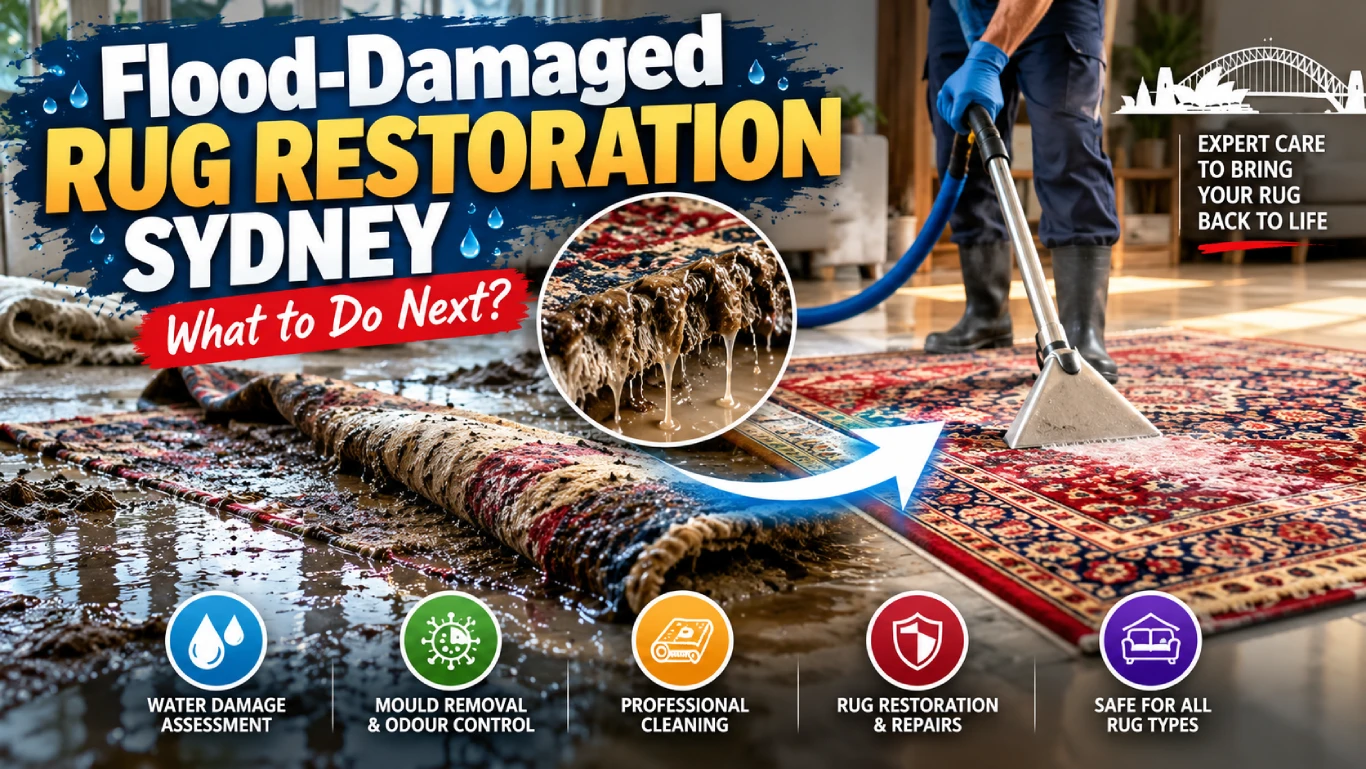
A water-damaged rug can be more than a cleaning problem. A leaking pipe, overflowing appliance or heavy storm can leave moisture trapped deep inside the pile, backing and foundation. If the rug is not dried appropriately, the damage may progress to persistent odours, colour changes, fibre deterioration and mould growth.
For Sydney homeowners, knowing what to do after a rug becomes wet can make a difference to its eventual condition. However, the right response depends on the source of the water, the rug's construction and how long it has remained damp.
If you are searching for water damaged rug cleaning in Sydney, this guide explains the warning signs to look for, the risks associated with different rug materials, what professional assessment may involve and how to decide whether restoration is a practical option.
Whether you have a wool rug, a handmade Persian piece or a modern synthetic floor covering, the first step is to understand the extent of the damage before attempting a clean.
What Causes Water Damage to Rugs?
Rugs can absorb water from several sources, and each incident may require a different response.
Burst Pipes and Plumbing Leaks
A burst pipe or leaking connection can saturate a rug before the problem becomes obvious. Water may spread underneath the rug and into the floor beneath it, leaving both surfaces damp.
Even after the visible water has been removed, moisture can remain trapped in a thick pile or dense backing.
Washing Machine and Appliance Overflows
An overflowing washing machine or dishwasher can expose a rug to water mixed with detergent, dirt and other residues. The affected area may develop a sticky feel or an unusual smell as it dries.
The appropriate cleaning method depends on the rug's fibre, the products involved and the amount of water absorbed.
Stormwater and Flooding
Stormwater may carry mud, debris, sewage and other contaminants. A rug exposed to floodwater should not automatically be treated like one affected by a clean-water leak.
The NSW Government providesofficial storm and flood clean-up advice, including precautions for handling potentially contaminated materials.
Rainwater Entering the Home
Water entering through a roof, door or window can soak rugs and underlay. If the leak continues unnoticed, the rug may remain damp long after the surrounding floor looks dry.
Spills That Reach the Rug Foundation
A large drink spill may appear less serious than a flood, but moisture can penetrate through the pile and reach the backing. This is particularly relevant to thick wool rugs and layered constructions.
What Happens When a Rug Stays Wet?
The effects of water exposure are not limited to visible stains. The condition of a rug can change as moisture moves through its fibres and foundation.
1. Mould and Musty Odours
Persistent dampness can encourage mould growth, especially when a rug is stored in a poorly ventilated area. A musty smell may indicate that moisture remains or that microbial growth needs further assessment.
A rug can feel dry on the surface while deeper layers remain damp.
2. Colour Bleeding and Dye Migration
Some rug dyes are sensitive to moisture, cleaning agents or changes in pH. When colours migrate, darker areas may leave marks on lighter sections of the pattern.
This risk is particularly important when dealing with handmade rugs, older textiles and rugs whose dye stability is unknown.
3. Shrinkage and Distortion
Uneven or unsuitable drying can cause a rug to change shape. Edges may curl, the surface may ripple, or the rug may no longer sit flat against the floor.
4. Damage to the Foundation and Backing
The backing, warp and weft threads help a rug maintain its structure. Prolonged dampness can weaken some materials, while unsuitable handling can worsen existing damage.
5. Staining and Residue
Water can transport soil and contaminants into the pile. Once the rug dries, it may show tide marks, discolouration or residue that ordinary vacuuming cannot remove.
These outcomes are not inevitable in every case. The extent of damage depends on the material, exposure conditions and subsequent treatment.
What Should You Do Immediately After Discovering a Wet Rug?
The priority is to prevent additional damage without putting yourself at risk.
Step 1 : Identify the Source of the Water
If the water came from a plumbing leak or appliance, arrange for the source to be addressed safely.
If flooding or sewage contamination is involved, follow local safety guidance and avoid unnecessary contact with the water or affected materials.
Step 2 : Keep People Away from Unsafe Areas
Floodwater can contain harmful contaminants, and water near damaged electrical equipment can present serious hazards. Do not enter unsafe areas or attempt to retrieve a rug if doing so puts you at risk.
TheNSW SES recovery guidanceexplains precautions for returning to flood-affected properties and handling damaged items.
Step 3 : Avoid Aggressive Rubbing
Rubbing a saturated rug may distort its pile, spread soil or affect delicate fibres. Do not scrub the surface to force out a stain.
If the water is known to be clean and the rug can be handled safely, gently blotting accessible moisture with a clean, absorbent white cloth may help. Do not handle rugs exposed to potentially contaminated floodwater without appropriate professional guidance.
Step 4 : Do Not Apply Heat or Unverified Chemicals
Avoid tumble dryers, high heat, bleach and random household cleaning mixtures. These can affect colours, fibres and backing materials.
Do not assume that a product suitable for fitted carpet is also appropriate for wool, silk or a handmade rug.
Step 5 : Record the Damage
Where safe, photograph the rug and note when the incident occurred, the likely water source and any visible changes.
This information can help a rug specialist understand the circumstances and can also be useful if you need to discuss the incident with your insurer.
Step 6 : Arrange an Appropriate Assessment
Provide details about the rug's approximate dimensions, material, water exposure and current condition. Ask whether the business can assess the damage and explain the proposed treatment before work begins.
Can a Water-Damaged Rug Be Restored?
In many situations, professional treatment may improve a rug's condition. However, no single cleaning method is suitable for every water-damaged textile.
A restoration assessment should consider the following factors.
Water source: Clean water from a known plumbing leak is different from stormwater or sewage contamination.
Exposure time: A recently wet rug may present different challenges from one that has remained damp for several days.
Fibre and construction: Wool, silk, cotton foundations, synthetic fibres and composite backings respond differently to moisture and cleaning products.
Dye stability: Existing colour migration may limit the results achievable through cleaning.
Structural condition: Fraying, weakened foundation threads, delamination and other existing damage can affect whether restoration is worthwhile.
Value and sentimental importance: An antique, handmade or inherited rug may justify a more detailed assessment than a low-cost rug that is extensively damaged.
The honest goal is to identify what can reasonably be improved, which risks remain and whether the cost of treatment makes sense.
Water Damage Restoration for Different Rug Types
Water-Damaged Wool Rugs
Wool is a natural fibre with particular moisture and cleaning requirements. A saturated wool rug may retain moisture within its pile and foundation, while unsuitable washing or drying can affect its shape and appearance.
Professional assessment should establish whether the rug has colour instability, backing damage, persistent odours or other concerns before selecting a cleaning method.
For more information about fibre-specific care, see our guide toPersian rug cleaning in Sydney.
Water-Damaged Persian and Oriental Rugs
Handmade Persian and Oriental rugs may contain wool or silk pile, cotton foundations and dyes with varying degrees of water sensitivity.
Water exposure can cause colours to migrate, especially if the rug is moved, rubbed or dried incorrectly. Its fringe and edges may also require careful inspection because they can be integral to the rug's construction.
A specialist should evaluate the dyes, weave and existing condition before recommending washing or restoration.
Water-Damaged Silk Rugs
Silk rugs require particularly careful handling because their fibres can be sensitive to friction, unsuitable cleaning agents and moisture-related changes.
Avoid experimenting with household stain removers. The safest next step is to seek an assessment from someone experienced with delicate textiles.
Water-Damaged Synthetic Rugs
Synthetic rugs vary considerably in their construction. Some can tolerate routine cleaning more readily than delicate natural-fibre rugs, but backing materials, adhesives and contamination still matter.
A synthetic rug exposed to clean water may have straightforward cleaning requirements, while one affected by sewage or extensive flooding needs a more cautious evaluation.
What Does Professional Water-Damaged Rug Cleaning Involve?
The appropriate process depends on the findings of the initial assessment. A specialist may recommend several stages rather than simply applying a standard rug wash.
1. Initial Inspection
The rug is assessed for fibre type, construction, visible staining, colour changes, odours and signs of structural damage.
The source of the water is important because it influences both the potential risks and the available treatment options.
2. Assessment of Moisture and Contamination
The specialist considers whether moisture remains within the rug and whether the incident introduced soil or other contaminants.
Where floodwater or sewage is involved, the business should explain the safety considerations and whether the rug is suitable for professional handling and restoration.
3. Selection of an Appropriate Treatment
Cleaning solutions and methods should be selected according to the rug's material and condition. A delicate handmade rug may need a different approach from a modern synthetic rug.
No treatment should be assumed appropriate until the necessary checks have been completed.
4. Moisture Removal and Drying
Where suitable, excess moisture may be removed using equipment and handling techniques appropriate to the rug.
Drying must account for the rug's thickness, backing, construction and the surrounding conditions. The objective is to avoid leaving damp areas trapped inside the textile.
5. Cleaning and Odour Assessment
If the rug is suitable for cleaning, the chosen method may help remove soil, residues and some odour-causing material.
Cleaning does not guarantee that every stain, smell or sign of water damage will disappear. Some changes may be permanent, particularly where dye migration or structural deterioration has already occurred.
6. Final Inspection
The rug should be checked after treatment for remaining dampness, visible changes and any issues requiring further attention.
The service provider should explain the outcome and identify any limitations rather than promise results that cannot be guaranteed.
For an overview of the business's general cleaning approach, read ourprofessional rug cleaning process guide.
How Much Does Water-Damaged Rug Restoration Cost in Sydney?
There is no reliable single price for every water-damaged rug. The total cost depends on the size and construction of the rug, the type of water involved, the extent of damage and the treatment required.
Common cost factors include :
Rug dimensions and thickness
Wool, silk, synthetic or mixed-fibre construction
The time the rug remained wet
Soil and contamination levels
Additional drying or odour-treatment requirements
Repairs needed for fraying, backing or foundation damage
Collection and delivery arrangements, where available
When requesting a quote, provide clear photographs, approximate dimensions, the rug material if known and details about the water exposure.
Ask whether the quote covers inspection, cleaning, drying, any additional treatment and transport. Confirm any extra charges before approving the work.
To understand the difference between routine cleaning and other options, you can also read our guide torug washing services in Sydney.
Is It Better to Restore or Replace a Water-Damaged Rug?
The decision should be based on the rug's condition, value and realistic restoration prospects.
Restoration may be worth exploring when the rug has significant financial or sentimental value, the structure remains reasonably sound and the damage appears treatable.
Replacement may be more practical if the rug is extensively contaminated, its foundation has deteriorated severely or the cost of suitable treatment exceeds its practical value.
A specialist assessment can help clarify the options, but it should not be treated as a guarantee that restoration will be successful.
Before making a decision, consider the rug's original cost, replacement availability, sentimental importance and any possible insurance requirements.
How to Reduce the Risk of Future Rug Water Damage
Although accidents cannot always be prevented, a few practical measures can reduce the likelihood of prolonged moisture exposure.
Check for plumbing leaks and address them promptly.
Avoid leaving wet rugs rolled up or folded for extended periods.
Investigate musty odours rather than masking them with fragrance.
Keep rugs away from recurring damp areas until the underlying problem is resolved.
Follow appropriate cleaning and maintenance guidance for the rug's material.
After a flood, follow official local safety advice before handling affected household items.
For flood-related precautions, refer to theNSW Government's storm and flood clean-up advice.
Frequently Asked Questions About Water-Damaged Rug Restoration
Can a water-damaged rug be saved?
Some water-damaged rugs can be cleaned or restored, but the result depends on the water source, exposure time, fibre type, dye stability and structural condition. An assessment is needed before deciding on the appropriate treatment.
How quickly should I arrange a rug assessment after water damage?
Arrange advice as soon as reasonably possible, especially if the rug is saturated or the source of water is uncertain. Delays can allow moisture-related problems to develop. Do not put yourself at risk to retrieve a rug from a flooded or unsafe area.
Can mould be removed from a water-damaged rug?
The options depend on the extent of the growth, the rug's materials and the source of moisture. Surface cleaning alone may not address deeper problems. A specialist should assess the rug and explain whether safe, effective treatment is feasible.
Can I clean a wet wool or Persian rug myself?
Avoid full DIY washing of a heavily saturated or delicate rug. Wool, silk and handmade rugs can be affected by unsuitable cleaning products, excessive friction and improper drying. For rugs exposed to contaminated water, seek appropriate safety advice rather than handling them yourself.
Does professional cleaning remove every water stain?
No. Some stains can be improved, but permanent dye migration, chemical changes and structural damage may not be reversible. A reliable provider should explain the likely limitations before treatment.
Can floodwater-damaged rugs be restored?
Possibly, but floodwater may contain sewage, debris and other contaminants. The safety and feasibility of restoration depend on the contamination and the rug's construction. Some rugs may not be suitable for recovery.
How much does water-damaged rug cleaning cost in Sydney?
The price depends on rug size, material, water source, contamination and the work required. Request an individual quote and confirm what the service includes before approving treatment.
Should I contact my insurer before cleaning the rug?
If the damage may be covered by your policy, check with your insurer about documentation, assessment and approval requirements. Photograph the damage where safe and retain relevant records. Coverage depends on the specific policy and circumstances.
Request Advice About Your Water-Damaged Rug in Sydney
A wet rug does not always need to be replaced, but it should not be treated without considering the cause of the damage and the materials involved.
If your rug has been affected by a leak, appliance overflow or other water incident, contact Rug Cleaning Sydney to discuss its condition and ask about suitable assessment options.
When getting in touch, include :
The rug's approximate size
Its material, if known
Photos of the affected areas
The likely source of the water
How long the rug has been wet
Any visible colour changes, odours or structural damage
Request a rug cleaning assessment :https://rugcleaningsydney.com.au/
Ask the team to confirm service availability, collection arrangements and the scope of any proposed restoration before booking.
No comments yet. Be the first!