
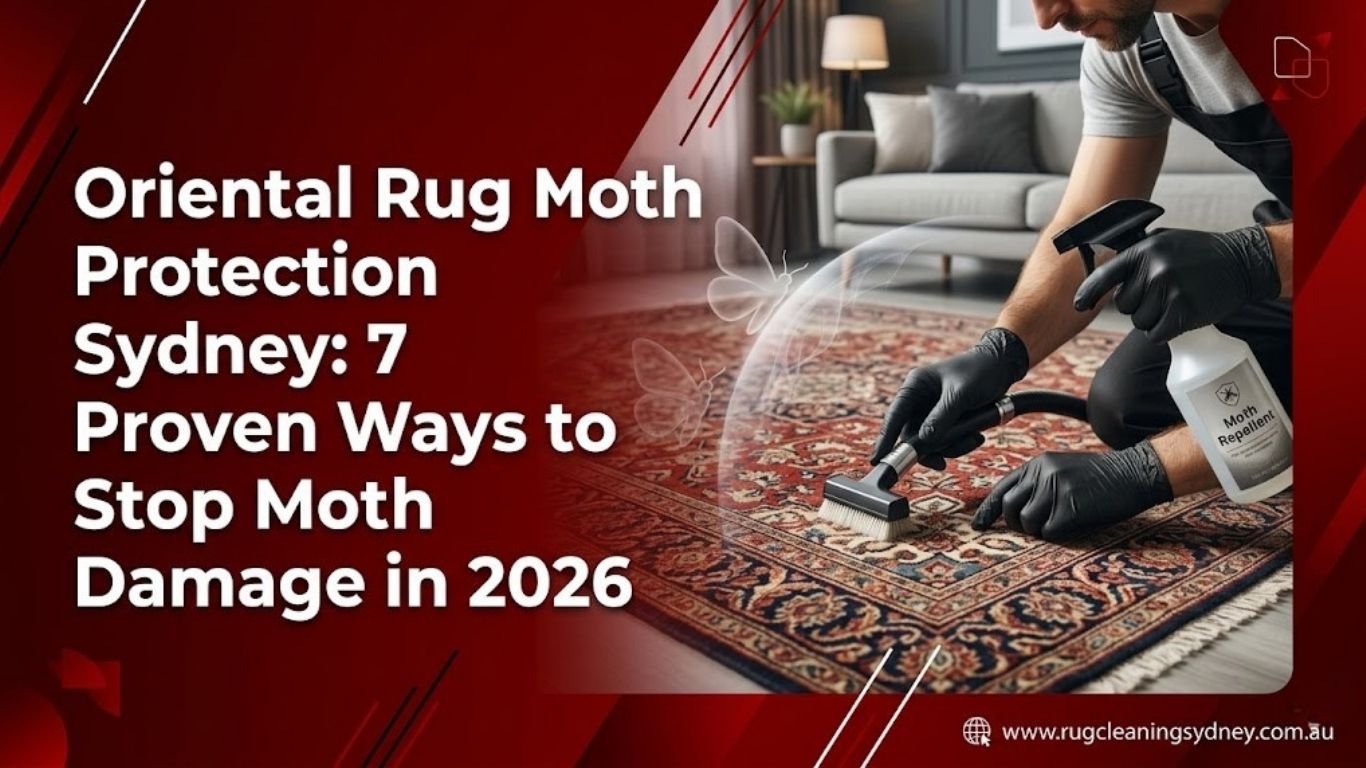
Oriental rug moth protection in Sydney refers to a set of preventive steps — including regular vacuuming, cedar or lavender deterrents, proper storage, and professional cleaning — that safeguard natural-fibre rugs from clothes moth larvae. Key steps include reducing dark humid areas, rotating rugs regularly, and inspecting undersides every 3–6 months.
You paid good money for that Oriental rug. Maybe it was a family heirloom. Maybe you hunted it down at a specialty store in Sydney's CBD. Either way, discovering small bare patches or silky webbing underneath it is one of the worst things you can come home to.
Moths don't just damage rugs — they destroy them. And Sydney's warm, humid climate makes this city one of the higher-risk locations in Australia for clothes moth infestations in natural-fibre rugs.
So how do you actually protect your Oriental rug from moths in Sydney — without guesswork? That's exactly what this guide covers.
📋 What's Inside
Why Moths Love Oriental Rugs — And Why Sydney Is High Risk
Here's the thing most people get wrong: it's not the adult moth that damages your rug. It's the larvae.
Clothes moth larvae feed on keratin — the protein found in wool, silk, and other natural fibres. Oriental rugs are almost always made from these exact materials. Persian, Turkish, Afghan, and Indian rugs use wool or silk pile, which makes them a prime target.
Sydney's climate adds to the problem. The city sees warm temperatures year-round, with humidity levels that create ideal breeding conditions for Tineola bisselliella (common clothes moth). Suburbs like Newtown, Paddington, Glebe, and Surry Hills — with many period homes and limited ventilation — see higher rates of moth activity in rugs.
What moths specifically look for:
- Dark, undisturbed areas (under furniture, in storage)
- Rugs not moved or vacuumed for weeks at a time
- Natural protein fibres: wool, silk, cashmere
- Humid, poorly ventilated rooms
- Rugs with food spills, body oils, or pet hair embedded in the pile
Synthetic rugs — like polypropylene or nylon — are almost never affected. But if your rug says wool or silk on the label, it needs protection.
Early Signs of Moth Damage in Oriental Rugs
Catching moth damage early can mean the difference between a $200 repair and a $2,000 restoration. Here's what to look for.
- Bare or thinning patches in the pile — especially near edges or under furniture
- Fine silky webbing or cocoon-like threads on the underside
- Small cream-coloured larvae (2–5mm) visible when rug is lifted
- Tiny moths flying near the rug when disturbed
- Gritty frass (moth excrement) mixed into the pile
Flip your rug over every 3–4 months. The underside reveals damage long before the top surface shows it. Pay special attention to corners and edges — that's where moths start feeding.
If you spot any of these signs, act immediately. Moths breed fast. A single female can lay 50–100 eggs over her lifetime.
7 Proven Steps for Oriental Rug Moth Protection in Sydney
These aren't vague tips. Each step here has a specific role in breaking the moth lifecycle.
Step 1: Vacuum Both Sides Regularly
Vacuum the top surface of your Oriental rug at least once a week. But here's what most people skip — vacuum the underside too, every 2–3 weeks.
Use a low-suction setting to avoid pulling at the pile. Focus on edges and tassels. This removes eggs and larvae before they establish a colony.
Step 2: Rotate Your Rug Every 3–6 Months
Moths target undisturbed areas. Simply rotating your rug 180 degrees every few months disrupts their habitat and exposes previously dark areas to light and foot traffic.
This also prevents uneven wear — a bonus for high-traffic Sydney homes.
Step 3: Increase Light and Air Circulation
Open blinds in rooms with Oriental rugs. Move furniture slightly so light reaches under-rug areas. In high-humidity periods (January–March in Sydney), use a dehumidifier or open windows regularly.
Moths hate light and dry air. Your goal is to make your rug an unattractive nesting spot.
Step 4: Use Cedar or Lavender Deterrents
Cedar wood naturally contains oils that repel clothes moths. Place cedar blocks or cedar sachets near (not directly on) your rug. Refresh them every 2–3 months by lightly sanding to re-release the scent.
Dried lavender bundles work similarly and are a popular choice in Sydney homes with pets or children who can't tolerate stronger chemical repellents.
Step 5: Inspect Rug Undersides Every Quarter
Set a calendar reminder. Every 3 months, lift your rug fully, inspect the backing, and check for frass, webbing, or larvae. A quick 5-minute check can save your rug.
If you store seasonal rugs in a wardrobe or garage, check them before and after storage periods.
Step 6: Professional Deep Clean Once a Year
Regular vacuuming removes surface debris, but not the oils, food particles, and organic matter embedded deep in the pile — exactly what moth larvae feed on. An annual professional clean removes these food sources entirely.
For Sydney homeowners with valuable Oriental rugs, this is the single most effective moth prevention measure available. Learn more about what professional rug cleaning in Sydney involves and why it matters for pest prevention.
Step 7: Use Sealed Storage When Rug Is Not in Use
If you're storing a rug for more than a few weeks, roll it (never fold), wrap in acid-free tissue paper, then seal in a breathable cotton bag or sealed plastic wrap. Add cedar blocks inside.
Never store in damp basements or garages. Sydney summers create the exact humidity moths love.
Worried about your Oriental rug? Our specialists offer free inspection and advice for Sydney homeowners.
Natural vs Chemical Moth Deterrents: What Actually Works
There's a lot of conflicting advice out there. Here's an honest breakdown.
| Deterrent | Effectiveness | Safe for Rugs? | Notes |
|---|---|---|---|
| Cedar blocks/balls | Moderate (repels, doesn't kill) | ✅ Yes | Refresh every 2–3 months |
| Lavender sachets | Low–Moderate | ✅ Yes | Best for light prevention |
| Mothballs (naphthalene) | High (kills larvae) | ⚠️ Caution | Toxic fumes — keep away from pets, children |
| Permethrin spray | Very High (kills on contact) | ⚠️ Test first | Can affect dyes — patch test required |
| Pheromone traps | Monitoring tool only | ✅ Yes | Confirms presence; doesn't eliminate infestation |
| Professional treatment | Very High | ✅ Yes | Best for active infestations |
The honest truth: no DIY product fully replaces professional treatment once an infestation is established. Natural deterrents work well as prevention. For active damage, call an expert.
The NSW Environment & Heritage recommends avoiding naphthalene mothballs in enclosed home spaces due to their toxicity. Cedar and lavender are safe, practical alternatives for everyday prevention.
How to Store Your Oriental Rug Safely in Sydney
Many Sydney homeowners rotate rugs seasonally or store spares. Poor storage is one of the top causes of moth damage — here's how to do it right.
Rolling vs Folding
Always roll. Folding creates creases that damage pile and weft threads over time. Roll the rug with the pile facing inward to protect the surface.
Wrapping Materials
Use acid-free tissue paper as the first layer — it prevents off-gassing from plastics reaching the fibres. Wrap the rolled rug in breathable cotton muslin or a Tyvek storage bag. Avoid standard bin bags; they trap moisture and accelerate moth and mould growth.
Storage Location in Sydney
Avoid garages, garden sheds, and basement areas — these are high-humidity environments, especially during Sydney's wet season. A climate-controlled spare room or wardrobe is ideal. Temperature between 18–22°C is recommended.
Add cedar blocks inside the wrapping and check stored rugs every 3 months. Never store for more than 6 months without an inspection.
For valuable antique pieces, consider professional off-site storage. Read our guide on antique rug restoration in Sydney to understand what damage looks like and when restoration may be needed.
When to Call a Professional Rug Cleaner in Sydney
Some situations go beyond what DIY can handle. Here's when it's time to pick up the phone.
- Active infestation: You see live larvae, webbing, or frass. Don't wait.
- Visible pile damage: Thinning or bare patches that weren't there 6 months ago.
- Pre-storage preparation: A professional clean before storage removes the food sources moths need to establish in a stored rug.
- Post-storage inspection: After any long-term storage, a professional check spots early damage before it spreads.
- Annual maintenance: Even without visible problems, an annual clean is the best prevention measure for Sydney's climate.
Professional rug cleaners use immersion washing — the only method that fully removes embedded proteins, oils, and allergens from wool pile. Steam cleaning or dry cleaning does not achieve the same depth of clean.
Farid Rugs at Rug Cleaning Sydney offers hand-washing, free pickup, and delivery across Sydney. Their team specialises in Oriental, Persian, and wool rugs.
You can also check these related resources:
- Expert Persian Rug Cleaning Sydney — caring for high-value hand-knotted pieces
- Health Benefits of Professional Rug Cleaning — why clean rugs mean a healthier home
- How to Protect Rugs from Dust and Allergens — broader rug care tips for Sydney homes
For expert insight on textile pest management, the IICRC (Institute of Inspection, Cleaning and Restoration Certification) publishes guidelines on wool rug care and pest prevention that are worth reading.
Your Oriental rug is an investment — don't let moths destroy it.
Book a Professional Rug Inspection in Sydney →Free pickup · Hand-wash cleaning · Sydney-wide service · 21+ years experience
People Also Ask: Oriental Rug Moth Protection Sydney
What attracts moths to Oriental rugs?
Clothes moths are attracted to the keratin protein found in wool and silk — the primary fibres in Oriental rugs. They also seek out dark, undisturbed areas. Rugs with embedded food residue, pet hair, or body oils are especially attractive to moths.
What are the early signs of moth damage in a wool rug?
The earliest signs are thinning patches on the pile surface, silky webbing on the underside, and tiny cream-coloured larvae near the rug backing. You may also notice small adult moths flying near the rug when disturbed. Check rug undersides regularly — damage often starts there.
How do I keep moths away from my Oriental rug naturally?
Cedar blocks, lavender sachets, and regular vacuuming are the most effective natural deterrents. Increase light exposure in the room, rotate the rug every few months, and keep humidity low. Natural deterrents work best as prevention — not as a cure for existing infestations.
How often should I professionally clean my Oriental rug to prevent moths?
Once a year is the standard recommendation for Sydney homes. Professional immersion washing removes embedded proteins and organic matter that moth larvae feed on. Pre-storage cleaning is especially important if you're putting a rug away for more than 4–6 weeks.
Cedar mothballs vs lavender — which is better for rug protection?
Cedar is generally more effective than lavender because its natural oils actively repel moths rather than just masking scents. However, neither will eliminate an active infestation. Use both as a preventive layer alongside regular vacuuming and professional cleaning. Avoid naphthalene mothballs near valuables due to fume risks.
What is the best way to store an Oriental rug to prevent moth damage in Sydney?
Roll the rug (pile inward), wrap in acid-free tissue and breathable cotton, add cedar blocks, and store in a climate-controlled room with stable humidity. Avoid garages and basements. Inspect every 3 months and never store longer than 6 months without checking.
Are Oriental rugs in Sydney at higher risk of moth damage than other cities?
Sydney's warm, humid coastal climate creates favourable conditions for clothes moth breeding, particularly in inner-city period homes with lower ventilation. Homeowners in suburbs like Newtown, Paddington, Glebe, and Surry Hills should be especially vigilant with regular inspections.
FAQ: Oriental Rug Moth Protection
Can I treat a moth-infested Oriental rug at home?
Minor infestations caught very early can sometimes be managed with thorough vacuuming, freezing (wrap in plastic, freeze for 72 hours at -18°C), and permethrin spray — patch tested first. However, for any established infestation or visible pile damage, professional treatment is strongly recommended to avoid further damage.
Does dry cleaning protect Oriental rugs from moths?
Dry cleaning is not recommended for most Oriental rugs — it uses chemical solvents that can damage natural dyes and fibres. It also does not penetrate deep enough to remove embedded organic matter. Hand-washing is the standard for valuable wool and silk Oriental pieces.
How do I know if my rug is wool or synthetic?
Pull out a few pile fibres and burn them with a lighter. Wool burns slowly, smells like burning hair, and produces a crushable ash. Synthetic fibres melt, smell chemical, and leave a hard bead. Only wool (and silk) rugs are at risk from moth larvae.
Will vacuuming kill moth eggs in my rug?
Regular vacuuming removes eggs and young larvae before they establish. It does not kill eggs already deep in the pile backing. This is why vacuuming the underside is just as important as the top surface. High-suction vacuuming twice a week can significantly slow a developing infestation.
How much does professional Oriental rug moth treatment cost in Sydney?
Prices vary depending on rug size and condition. A standard professional clean that removes moth food sources typically starts from $80–$200 for medium-sized Oriental rugs. Active infestation treatment and restoration of damaged pile will be additional. Contact Rug Cleaning Sydney for a free quote.
Can moths damage a rug that's rolled up in storage?
Yes — stored rugs are among the highest-risk items because they're undisturbed for months. If a rug is stored without proper sealing and cedar deterrents, moths can establish and cause significant damage before you even notice. Always clean before storage and inspect on retrieval.
Are pheromone moth traps worth using?
They're useful for monitoring — if you catch moths in a pheromone trap near your rug area, it confirms activity and prompts further action. They don't eliminate an infestation on their own. Think of them as an early warning tool rather than a solution.
Related Articles
Book Your Rug Cleaning in Sydney Today
171 Victoria Rd Drummoyne NSW2047.
Phone- +61 2971 92526
Email- info@rugcleaningsydney.com.au
Website- www.rugcleaningsydney.com.au
Opening Hours- Monday to Saturday – 10 AM to 6 PM
Sunday – Closed
You can also schedule a video consultation from the comfort of your home.
No comments yet. Be the first!